Shark Edition

Cape Cod Shark Watch

2,847 days since the last confirmed Cape shark attack

Counted from the Sept. 15, 2018 Wellfleet attack at Newcomb Hollow Beach, the last confirmed Cape shark bite/attack found in today's source check. Sharks are real here; the useful posture is curiosity plus basic ocean sense.

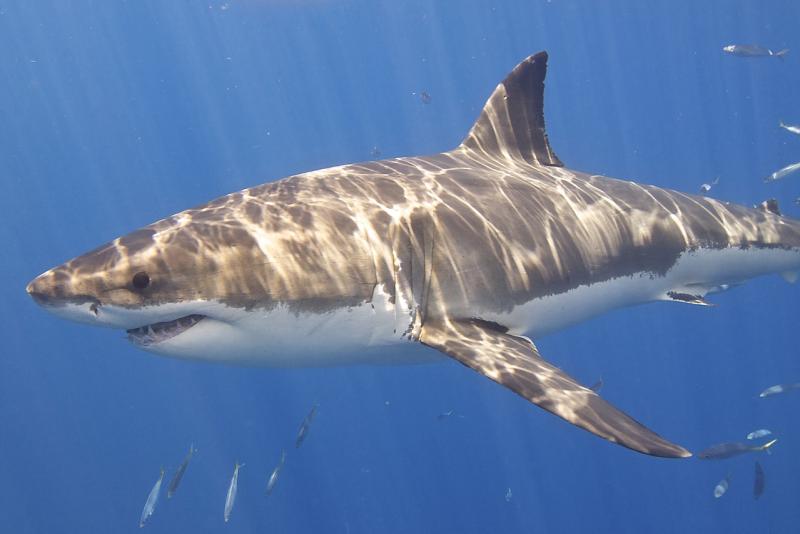
A great white shark swimming underwater in clear blue water
Public shark information comes from verified sightings, acoustic receivers, satellite tags, photo ID, research cruises, and old-fashioned beach reports. Cover photo: Elias Levy, CC BY 2.0, via NOAA Fisheries.

Outer Cape Is In Peak Shark Season

July is when Cape shark curiosity becomes daily beach math: warm enough water, many people in the surf, seals close to bars and cuts, and white sharks returning to the Outer Cape feed zone. Today's practical read is active-but-not-panic: Sharktivity is the best local alert layer, OCEARCH is useful for wide-ranging named sharks, and the weather adds murk, chop, fog, and thunderstorm windows that make spotting wildlife harder.

Monitoring
Use Sharktivity first for beach-near alerts; use OCEARCH for broader satellite-tag stories.
Known Sharks
Contender, Breton, Koala, Lumpy, Mary Lee, Betsy, and Steve are in today's notebook.
Shark Weather
Outer waters have a small craft advisory, 3-5 ft seas, fog tonight, and UV near 8.
Seal Predation
Shark interest follows gray seals, especially on the ocean side from Provincetown to Chatham.
News
Contender's June 25 Z-ping and a recent Nantucket catch-and-release remain the live items.
Safety
Avoid seals, bait balls, murky low-light water, and swimming alone beyond the break.

What The Monitoring Projects Actually Show

Sharktivity Is The Local Layer

The Atlantic White Shark Conservancy's Sharktivity app is built with input from the Massachusetts Division of Marine Fisheries, Cape Cod National Seashore, and coastal towns. It mixes confirmed sightings, unconfirmed reports, receiver detections, and SPOT-tag locations into one public safety map.

The key detail: red alerts are confirmed sightings close to public beaches. Blue icons are confirmed sightings. Yellow and purple receiver icons are tag detections, and green SPOT positions are satellite-tagged sharks when a fin breaks the surface long enough.

Sharktivity app

OCEARCH Is The Road Trip Layer

OCEARCH's tracker is best for migration stories: sharks surfacing from Florida to Canada, wintering off the Southeast, or throwing a short Z-ping that proves a tag woke up without giving a precise location. That is fun, but it is not a beach-closure tool.

For Cape beach decisions, combine Sharktivity, lifeguard flags, local closures, seal presence, and your own visibility read. A named shark pinging offshore is not the same thing as a shark at your sandbar.

OCEARCH Global Shark Tracker

Known Sharks Cited Today

OCEARCH

Contender

Nearly 14 ft and about 1,653 lb at tagging, Contender is the headline male in the public tracker. His June 25 Z-ping says the tag surfaced briefly, not that researchers got a clean position.

Track Contender

OCEARCH

Breton

Tagged off Nova Scotia in 2020 at 13 ft 3 in and 1,437 lb, Breton is still a useful migration character. His 2026 southern trip toward Turks and Caicos was unusual for the western North Atlantic data set.

Track Breton

AWSC

Koala

Koala was a mature male first identified by AWSC in 2022 and found dead on Nauset Beach in October 2024. His necropsy became useful science rather than just a beach spectacle.

Koala report

Cape Lore

Lumpy, Mary Lee, Betsy, Steve

Lumpy, Mary Lee, and Betsy are older public-tracking names that helped make Cape shark science legible. Steve is the informal 2025 Woods Hole paddleboard sighting nickname, not a formal catalog entry.

AWSC research

Beach Conditions That Change The Read

Today's Read

NWS has a small craft advisory for the outer waters from Provincetown to Chatham to Nantucket through late tonight: SW wind building to 15-20 kt, gusts to 25 kt, seas 3-5 ft, isolated thunderstorms, and patchy fog tonight with visibility dropping to 1 NM or less.

Open-Meteo marine puts the ocean-side water in the upper 50s to upper 60s F through the weekend. That is comfortable enough for beach traffic and entirely compatible with Cape white shark season.

Tide Board: Chatham Proxy

DateMorningAfternoon / Night
Thu Jul 2Low 9:05 AMHigh 2:45 PM; low 8:52 PM
Fri Jul 3Low 9:41 AMHigh 3:21 PM; low 9:33 PM
Sat Jul 4Low 10:16 AMHigh 3:57 PM; low 10:16 PM
Sun Jul 5Low 10:52 AMHigh 4:35 PM; low 11:02 PM

Seal Predations & Why The Cape Is Interesting

What To Watch

Most of the daily shark logic starts with seals. NOAA notes that gray seals are year-round on the Cape, adult gray seals can weigh 550-850 lb, and 30,000-50,000 seals may be in southeastern Massachusetts at various times. White sharks shift toward marine mammals as they grow, making seal-rich bars and inlets the interesting places.

Practical signal: if seals are tight to shore, rafting near a cut, or feeding in a visible bait school, treat the water as shark habitat. If birds, fish, and seals are all working one spot, that is a wildlife show to watch from sand or boat, not a swim target.

Predation Notebook

White sharks on Cape Cod often hunt in shallow, murky water. Chatham, Monomoy, Nauset, Head of the Meadow, Marconi, Newcomb Hollow, Cahoon Hollow, Race Point, and Herring Cove all deserve extra attention when seals are visible.

No single public feed reliably lists every seal predation in real time. Sharktivity alerts, lifeguard reports, and beach closures are the practical signals; stranding or injured marine mammals should be reported through IFAW's Cape-area hotline.

Recent Items Worth Knowing

Jul 1

Contender Mystery Ping

OCEARCH's big male Contender produced a June 25 Z-ping, which means a too-brief surface transmission rather than a clean location fix. The story is useful because it explains why tracker dots are sometimes precise and sometimes only clues.

Read item

Jun 11

Nantucket Surprise Catch

A Nantucket angler unintentionally caught and quickly released a great white from the surf. The useful lesson is regulatory and practical: white sharks are protected, and any accidental interaction should be brief, careful, and release-focused.

Read item

Cape Context

Koala's 2024 Necropsy

The 12-ft-plus shark Koala washed up at Nauset in October 2024. AWSC identified him from prior catalog work and took tissue samples, showing how even a dead shark can add to the regional data set.

Read item

How To Be Casual, Curious & Not Dumb

Good Rules

  • Stay close to shore and avoid swimming alone.
  • Avoid seals, bait balls, fishing activity, and murky low-light water.
  • Do not wear shiny jewelry or splash around near feeding fish.
  • Use beaches with lifeguards and pay attention to purple flags and closures.
  • Use Sharktivity for alerts, but do not treat any app as a safety guarantee.

Risk Translation

NOAA's Cape seal-and-shark summary is blunt: drowning and rip currents are bigger everyday hazards than shark bites. The right conclusion is not "ignore sharks"; it is "do not let shark fascination crowd out the rest of beach safety."

If the water is rough, foggy, full of seals, and lifeguards are flying a shark flag, that is a perfect day to become a binocular person.

Four-Day Shark Watch Forecast

Thu Jul 2

Active / Murky

Water: 58-64 F. Ocean: 3-5 ft, SW gusts 25 kt.

High shark-season interest, but chop, fog tonight, and storms make wildlife spotting harder.

Fri Jul 3

Hot Beach Traffic

Air: Up to 92 F inland. Ocean: 2-4 ft outer Cape.

Classic July watch day: more swimmers, warm water trend, seals still the controlling cue.

Sat Jul 4

Storm Check

Rain: 33% max probability. Wind: gusts near 24 mph.

Holiday crowds plus scattered storms. Use lifeguarded beaches and update Sharktivity often.

Sun Jul 5

Cleaner Read

Air: 64-76 F. Ocean: around 2 ft, E/NE flow.

Better viewing and walking weather. Still shark habitat wherever seals are working close in.